Worn tires signs guide
Signs Your Tires Need to Be Replaced
Tires are the only part of your car actually touching the road, making their condition directly tied to your safety. Knowing the warning signs helps you replace them before they become a genuine hazard rather than after.
Checking Tread Depth
The simplest test requires no tools at all: insert a coin into the tire's tread grooves. If you can see the top of the inserted portion clearly across multiple points on the tire, the tread has likely worn down to an unsafe level and replacement should be considered soon. Many tires also include built-in wear bar indicators — raised sections within the tread grooves that become flush with the surrounding tread once the tire is worn out.
Visible Damage to Watch For
Cracks in the sidewall, often called dry rot, can develop even on tires with plenty of remaining tread, particularly on vehicles that sit unused for long periods. Bulges or blisters on the sidewall indicate internal damage and should be treated as urgent, since they significantly increase the risk of a sudden blowout.
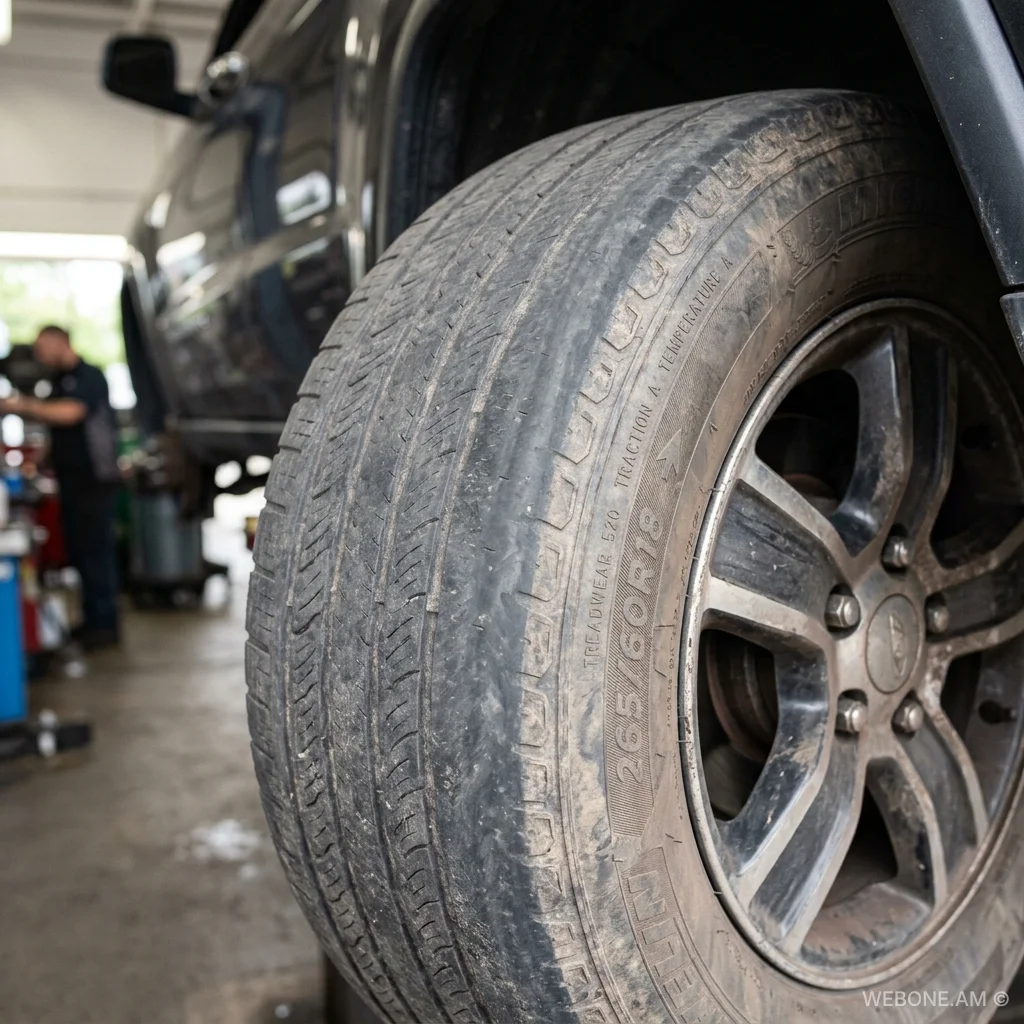
Uneven wear patterns — where one section of the tire is noticeably more worn than the rest — often point to alignment or suspension issues rather than the tire itself, and addressing the underlying cause can prevent the replacement tire from wearing unevenly too.
Age-Related Wear
Tires degrade over time even with minimal use, due to the rubber compound breaking down gradually. Most manufacturers recommend replacement after six to ten years regardless of remaining tread depth, since aged rubber becomes less flexible and more prone to failure. Check the tire's manufacture date, usually printed on the sidewall as a four-digit code indicating the week and year of production.
Symptoms While Driving
Increased road noise, a noticeably rougher ride, or the car pulling to one side while driving can all indicate tire wear or damage. Reduced traction in wet conditions is often one of the earlier, less obvious signs, since worn tread struggles to channel water away from the tire's contact patch as effectively as newer tread.
When to Replace Immediately
Any visible sidewall bulge, exposed steel belts showing through the tread, or a rapid, unexplained loss of air pressure should prompt immediate replacement rather than delay. Continuing to drive on a tire in this condition significantly increases the risk of a sudden, dangerous blowout.
Final Thoughts
Tire condition is one of the easiest things to check yourself with no special tools, yet it's frequently overlooked until a problem becomes obvious while driving. Regular visual inspections, combined with attention to how the car feels and sounds on the road, can help you replace tires proactively rather than reactively.
This article is for general informational purposes only. If you notice any sudden tire damage or pressure loss, seek professional assistance before continuing to drive.